You are GUARANTEED to lose 20lbs+ in 3 Months if you apply these 3 Priceless Tips

Ever struggled to lose weight? Tried every method under the sun, and not been able to stick them? Have you tried eating healthy, doing cardio, hitting the gym pretty consistently, and still not made progress? Well these 3 tips will SOLVE your problems, and will be the REAL turning point in your fat loss journey.

I promise you.

The past 3 months I myself have TRIED and TESTED these tips, and I promise you they will work if you actually apply them. It’s really quite simple.

1)      Discover your Maintenance Calories and Eat in a 500+ Deficit

Eat in a calorie deficit. It is the be all and end all of fat loss, however, it’s not always so easy to apply. The best way to start though, is by getting your calculators out and doing some MATHS.

I know it sounds a bit SHIT and boring, but honestly if you can’t be arsed to do 5 minutes of Year 4 Maths, then don’t bother trying to commit to 3 months of fat loss.

All you have to do is multiply your bodyweight (in LBS/pounds) by 14 if you are a low-activity person (desk-job in office, 6,000 steps); 15 if you’re a medium (spend a good portion of your day on feet and moving 8,000-10,000 steps); and 16 if you’re high-activity (work as a labourer, or walk 12,000+ steps each day).

Right, before you get all touchy about which number you choose. Don’t worry too much, just be HONEST with yourself. It’s always better to underestimate, but at the same time, try to be honest. If you work in an office but f*%king cycle to work, yeah sure, go for 16. Just try and be self-aware, and if you’re not sure, just go for 15.

Eg. If you weigh 180lbs: 180 x 15 = 2,700.

Now- that is your MAINTENANCE calories. In theory, if you carried on as normal and ate this exact amount of calories, your bodyweight would stay EXACTLY the same.

But we don’t want that, so what we’re gunna do is SUBTRACT this number by 500, and there you will have your target calories to hit each day.

And for those of you who didn’t get Year 4 Maths:

2,700 – 500 = 2,200cals

The next job for you is to track, which sounds like a BALLACHE, and I’m not gunna lie – it kind of is to begin with. Once you get used to it though, it’s no more a ballache than brushing your teeth – you just have to get into a HABIT.

Use the myfitnesspal app, and it scans the barcode of packaging and saves your most frequent foods. It will ask for a weight in grams etc – this is important. If you are not familiar with weighting, you must get a SCALE and weigh things. Weigh everything you can.

As I said it is a BALLACHE to begin with, but if you really COMMIT to it, it’s honestly fine. A few weeks down the line, you could get a way with eyeballing a few measurements you do daily (I rarely weigh my morning oats, just because I can usually get 40g in a bowl with my eyes closed now).

It is just so necessary. If you really can’t be arsed to commit to it, then just don’t bother then. Don’t go crying later when you regret it; when to stopped trying to lose fat because you couldn’t weigh something on a scale. Of all the things that is going to challenge you on your weight loss journey, don’t let it be this. Please.

Just find out your calorie maintenance. Track your food. And eat in 500 calorie deficit (which, if you’re 180lbs and have a moderate activity level, is 2,200). It’s fucking easy.

2)  Eat 150-200g of Protein a day and Satiating foods for Sustainability

Alright alright, maybe it’s not quite as easy as that. Sure, it is TRUE that if you followed that advice solely, and simply ate 2,200 calories a day – in whatever fucking foods you want – you would lose weight.

But let’s be realistic, if you ate 2,200 calories in chocolate fingers and chips you ain’t gunna last long. If you could eat JUST those for 3 months, my hat goes off to you (good idea for a vlog to be fair, I’d watch it.. ‘Man gets Shredded in 3 Months Eating ONLY Chocolate Fingers’).

But anyway..

What you actually need to do is eat food that will, in short, keep you full (satiated). Protein and NUTRITION-dense foods such as green vegetables will achieve this. Protein ( meat, eggs, dairy shit, whey) is extremely SATIATING – its absorbed very quickly, and makes you feel full for ages. The same with green veg..

Green Veg (broccoli, baby spinach etc) are extremely low-calorie, but still fill you up. That is their REAL power. They are crucial helping you SUSTAIN your diet and calorie deficit, with the added bonus of having shitloads of magical micro-nutrients and vitamins. Spinach helped in getting Popeye huge biceps, yes.. but not because they aided protein synthesis, because of their satiation.

Protein is also vital for Maintaining as much muscle as possible. Being in a calorie deficit means your muscle gains will come to a halt, however, if you maintain your training and eat enough protein, you should keep pretty much all of it. Enough protein should be your weight in lbs transformed into grams.

For example, 180lbs = 180g of Protein a day.

Protein can be quite expensive and hard to consume large amounts, so for convenience I’d recommend getting some WHEY PROTEIN. I’ll have it in a shake after workouts, and maybe in some oats – about 30-50g of it a day makes hitting your protein target waaay easier.

Eat Carbs as well though – just don’t eat them like you’re a fucking 8 year old. Fine, if you love haribos so much eat them, just make sure you eat a potato or some fruit once in a while too. You CAN eat bread and pasta etc, just make sure you track them properly and are aware that pasta is one of the morish fucking food ever. Personally, I could literally eat about 3,000 cals worth of pasta and still be searching for pizza afterwards.

If you absolutely love pasta, I’d recommend looking at the little pots you get from supermarkets and checking out the portion sizes – it will give you a good idea of how much you can eat before suddenly realising you’ve consumed an entire wheat-fields’ worth. I personally could eat pasta for 6 hours and not feel full. It’s a hazard.

3)  Be Consistent and Patient

Know you should have an idea of HOW much calories to consume, and WHAT to consume. Now it is important to establish this fact, and truly acknowledge how true it is: If you eat in a 500 Caloric deficit for 3 months, you WILL lose a significant amount of weight.

It is physically impossible for it not to happen. You just have to be true to yourself, and stick to your goal.

The occasional day where you eat your maintenance, or even go into a surplus, will NOT hinder your progress significantly (provided it is actually OCCASIONAL, as in, on occasions). We’re social animals, eventually you’re gunna be invited to a birthday, or your favourite football team will win the Champions League, or you got a new puppy – in that scenario, fine, go for it. But make sure it’s limited to maybe once or TWICE a month. Just don’t take the piss basically.

It will take a while for you to see VISUAL progress in the mirror, so don’t be checking yourself everyday – it doesn’t work like that. Fat loss is a looong, slow process, impossible to notice from day to day. I’d recommend taking progress photos every week though, as when you compare your week 1 photo to say week 5, 10 and 12, it will be very rewarding. Just wait until your post-gym pump, get your kit off, and start snapping. Make sure there’s no-oen changing in the background though.. GDPR and all that.

Weighing yourself is a difficult one.

 A lot of people recommend weighing yourself everyday, but I don’t think that’s always necessary – as for some people it will fuck them up mentally. Scales fluctuate massively from day to day, but if you weigh yourself at the same time, in the same state (in morning just before a shower and after a shit), then take an average – then it would be useful. But its not vital.

If you know the scales fuck you up, just weigh yourself once every 2 weeks. If you concentrate on being consistent, hitting your calories, the weight WILL come off, regardless of whether you look at the scales everyday or not.

In losing weight, MINDSET is EVERYTHING.

Force yourself to BE PATIENT. Say to yourself, ‘I will not acknowledge my progress until at least ONE month in’. That way the first month you can just focus on the method, and forget about the results. If you NAIL the method, the results will come NATURALLY. But if you are constantly in need of gratification from results, you will FAIL and CHEAT on your diet. So, for the first month, just focus on the method and FORGET about the results.

If you enjoy the progress, the results will sneak up on you. A watched kettle never boils, just like a watched Ab never pops.. (If you can think of a better version of that, email it to me)

In a bit,

Harry
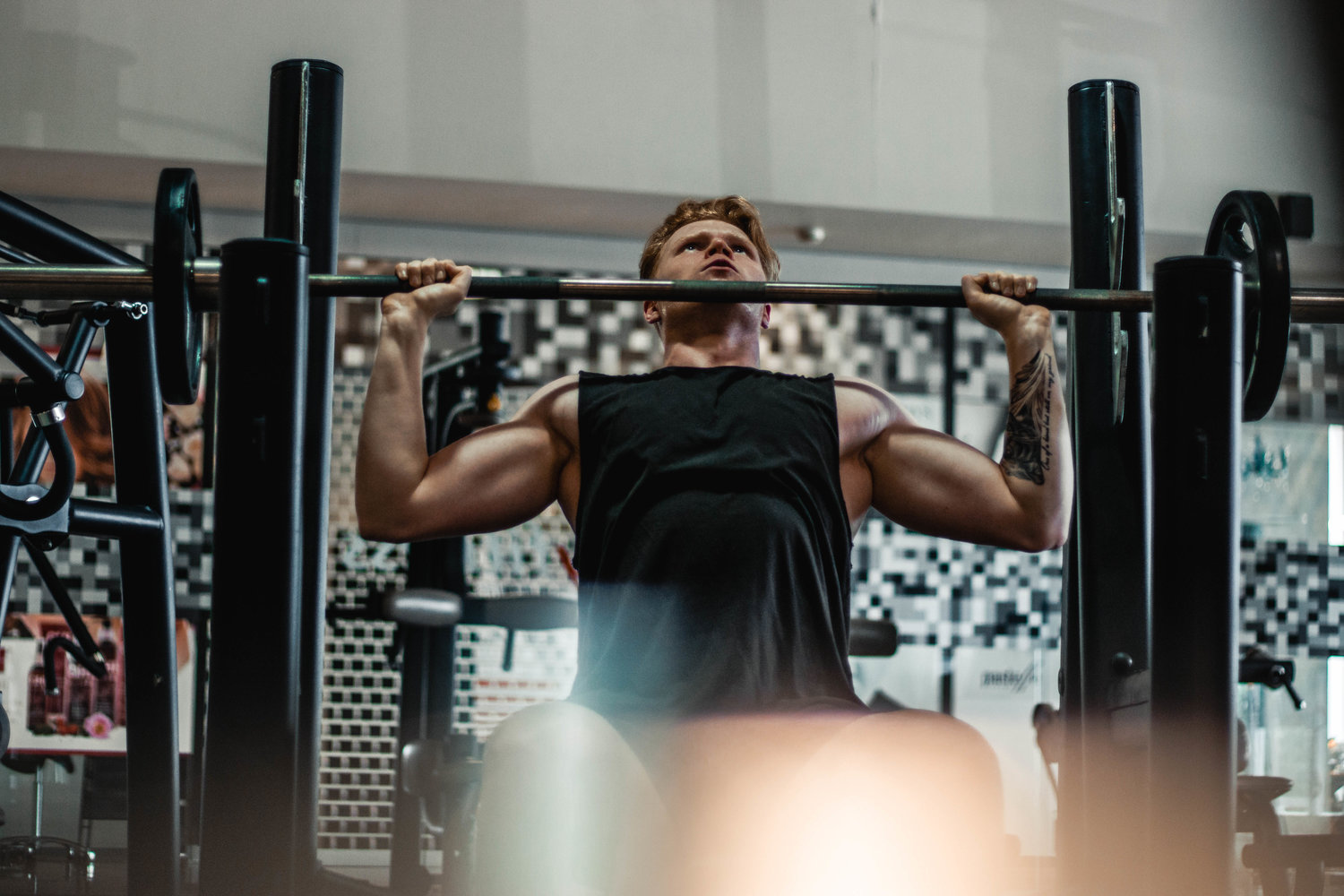
5 Secrets EVERY Gym Beginner Will Benefit From

1) Ask yourself WHY

Fully understanding the reason why you want to begin your fitness journey should be the single most powerful internal motivation you have. 

Think about the reasons why you want to start. The fitness lifestyle is a massive commitment when first starting, so you MUST be certain that your mindset is right going in.

If you don’t do this, you’re just setting yourself up to fail.

Think specifically about the benefits you will gain from being fit and healthier Think about how it would improve your life. 

Then, think about what your life would be like WITHOUT those benefits. The common motivations people usually must start are to:

 ‘lose weight (fat)’, ‘feel better’, or ‘look better’. 

These are okay – but it is much more useful to think more about more specific, emotionally charged reasons. For example:

·       ‘I want to be confident enough to take my shirt off on the beach’

·       ‘I wanna lose X lbs by X date (which could be a holiday/wedding etc’. 

The more specific, life-related, emotional-charge and accountability- the better. 

Everyone feels motivated at some point to become fit and healthy; to go to the gym.. but there is a difference between the people who talk about going, and the people who actually go regularly.

Having one clear. powerful, internal motivation will help carry you through when times are hard- when you are not motivated to go to the gym. This is what will make you go even when you don’t feel like it.

And that is where the battle is won or lost.

2) Educate yourself 

Prior to entering the gym make sure you know educate yourself about what you are doing, whether it be to build muscle, increase strength, or enhance endurance. 

You don’t have to know much – just understand the basics.

If you want to build muscle you want to be doing reps of around 8-12 for 3-4 sets, at a weight that lets you perform clean, meaningful reps that stimulates the active muscle. If you are building strength, go for a higher weight but for less reps (1-5) for more sets (5+). 

If you want train endurance, or cardiovascular, it is useful to have a time and pace in mind before you start your session. Compete with yourself.

Also – this is important:

before you even step into the gym, make sure you have a plan for what exercises/machines you’re going to do.

Ideally, have the entire workout planned out, whether on your phone, or even better – a journal. 

This will prevent from having that awkward initial stroll when stepping into the gym, like a lost soul searching for purpose.

Don’t do that. Prepare. Plan your workout.

 3) Progress not perfection 

At the beginning of your training don’t be getting worried about whether you are doing everything perfectly. Nobody can pull off perfect form and immaculate technique right off the bat. It takes time.

Realise that if you keep turning up,

you WILL progress; you just have to be patient.

 The important thing to begin with is making sure you turn up regularly. The rest will take care of itself. Bear in mind though that one of the biggest mistakes people make when starting out in the gym is trying to lift more than they can handle. It’s just painful to watch, and it does nobody any good.

Yes, lift a weight that challenges you – because if it doesn’t challenge you it doesn’t change you – but use common sense as well.

Understand that in order to progress, particularly with muscle hypertrophy (muscle growth), the weight must be light enough for you to perform the complete and full movement..

By lifting more than you can handle you are not only doing nothing for your fitness gains but are risking injury too.

Remember, patience. Start small, gradually build up. Play the long game if you want to keep your gains.

4) Diet

Diet is half the deal (many would argue more than half).

If you don’t like that, then don’t bother going to the gym.

You may know the kind of person that goes to the gym regularly but has never noticeably improved their physique. Well, that’s because they are eating too much SHITE consistently.

There’s nothing wrong with having a mixed diet- nothing at all. But realistically, If you want results you have to earn them not only in the gym, but in the kitchen too.

I’m not saying you need to be eating steamed broccoli and chicken for every meal, but to just prescribe some common sense. Eat a balanced diet, get your PROTEIN in (1g of protein per pound of bodyfat – so aim for 170-200g a day, and you’ll be fine)..

But also.. and don’t use going to the gym as an excuse to eat unhealthily.

Of course, you have got to eat more comprehensively, but in order to reap the benefits of your hard work in the gym you need to eat quality food. Protein is your new best friend, try to get it in most meals you have, particularly post-workout.

Studies have conclusively shown that people who consume protein immediately (within 20-30 minutes) after resistance training gain more muscle than those who do not- see study.

Carbohydrates are also beneficial to consume post-workout, as it spikes your insulin (an anabolic, ‘building-up’ hormone) levels at a time where you want to be in an anabolic state, i.e. to build muscle.

Basically.. consuming protein and carbs straight after training will help you build muscle quicker. You don’t need to over-complicate this – just eat your lunch or whatever after you go to the gym.

It will benefit you massively.

protein sign.jpg

5) Consistency 

If you take nothing else from this article, remember this:

if you are not CONSISTENT with your training and your diet,

you will not make progress.

Turning up is more than half the battle, it’s about 85% of it. And if you keep consistent in turning up, the other 15% will work itself out over time.

Anyone can go to the gym when they are feeling motivated, but what separates those who go regularly and those who go sporadically is DISCIPLINE.

Motivation is temporary,

but the ability to exercise discipline is permanent and far more useful.

Enjoy being disciplined, enjoy grinding out actions that you don’t feel like doing. If you master this, it will start translating into other areas of your life. Discipline is the key to consistency, and consistency is what makes discipline.

And finally, remember not to take all this stuff too seriously.

Keep your intentions quiet and don’t try and force your friends into your new fitness world. What you are doing is for you, not anyone else. Just make sure you enjoy the journey, because that’s what it’s all about.

If you enjoy the journey, the results will come naturally. It’s not about effort, it’s about habits, it’s about consistency.. it’s about enjoying the progress, not the results.

Menswear: 5 Secrets for Summer Style and Sweat-Proofing in the Gym

Summer is well and truly underway. But are you equipped? Not just your outside world wardrobe.. But your gym one too?

Being comfortable in what you wear to the gym has a SIGNIFICANT impact on how well you train. So, don’t wave it off as if it doesn’t matter. Because it does.

The only thing you want to be thinking about when you’re in that gym are your lifts. To make sure this happens, however, you have to be prepared.

That’s where this article comes in.

Everything I’ll talk about will be general: giving you a useful and applicable guideline, without making you buy certain clothes from specific brands.

So.. without wasting anymore of your procrastination time, let’s give you some value.

1. Wear a Tank

  • Tanks are comfortable

Tanks have increased air-flow- a lot less restrictive than t-shirts. Therefore, they will keep you cooler, allowing the increased temperature of the potentially steamy gym to be less of a distraction.

  • Tanks allow you to see muscle contraction better (especially in the shoulders)

You’re doing lateral raises in the mirror.

You’re watching each deltoid contract, every striation shimmer, every muscle fibre pop..

This is only possible when wearing a tank. Get one. And immediately improve your form (if only for lateral raises..)

2. Shorts are good – but keep them.. short

If they go below the knees, they ain’t shorts. They’re shits. (Jesus that’s the worst joke I’ve made in a long time.. oh well, it’s staying in. Might as well add some filler. Got to get that SEO on point.) (if you don’t know what SEO is.. keep it that way. The less people who know, the better it is for me) (luckily for you though, part of SEO is creating useful content.. so rest assured, majority of this blog is useful for you, asides from the last 4-5 sentences- which have been useless and meaningless and a waste of time for you to read).

Anyway.. shorts..

Shorts that are short look much better and are also waaay more practical..

There’s more airflow, more skin on show and also they look good. Yeah sure.. You could say, ‘I don’t give a shit how I look/what I wear in the gym..’, that’s fine. I’m all for that.. But if that is the case, then this article probably isn’t for you. Go read something else, I won’t mind.

Anyway..

REMEMBER: Make sure your shorts have decent pockets as well- zipped if possible. Otherwise they could cause a nightmare situation of your phone falling out every time you lay on the bench.. Quickly escalating to Big Phil dropping a 40kg dumbbell on your new Samsung..

Oh well. Probably time to get an iPhone anyway..

But if you have an iPhone.. Wear shorts with good/zipped pockets. Don’t be silly.

3. Wear a cap

This one applies to me massively..

I love a cap in the gym. There’s something about it. It just looks sick.

It also absorbs and covers up your sweat head (so beware- maybe not wear your freshest one to workout in too much, otherwise it’ll get wrecked).

Wearing a cap – frontwards or backwards- will help keep the sweat out of your eyes, as well as stop your fluids dripping all over the gym floor. It’s not a replacement for a towel though. So, bring one of them as well. Your gym, and every other attendee, and equipment, and yourself.. will appreciate it.

Quick tip with washing caps: be careful. You CAN use a washing machine.. But make sure it’s no longer than 20 mins. You could also just soak it in a sink. It’s up to you..

But NEVER use a drier. It will mess up the panels and mis-shape the visor.

4. Stay away from Grey

Sweat patches.

I mean.. No-one really cares if you sweat in the gym and have patches all over your shirt. Sometimes, when you’re in the zone, it actually feels good to see yourself drenched.. It triggers a primal feeling of pure animalistic tendencies.

But yeah.. On the days you want to avoid it, go for the darker colours, or if you insist.. White.

(Side tip: Wearing white makes you look bigger, by the way)

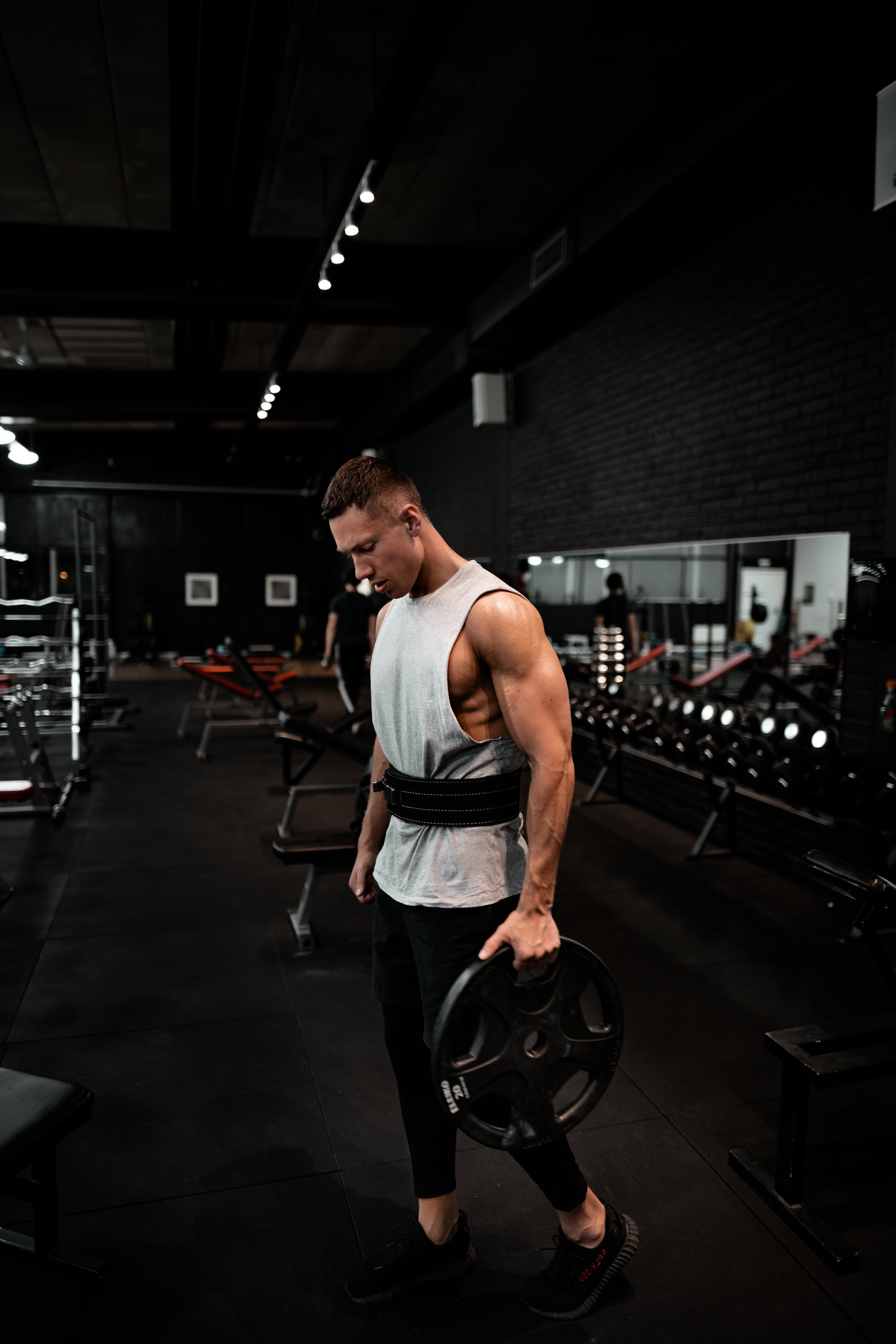
Also.. For the keen-eyed trolls, yes I KNOW the dude in the image above is wearing grey. I don’t care. It looks like he’s in a pretty air-conditioned gym. He’s allowed. But you aren’t (unless you want that animal feel)

5) Wear an oversized T-shirt

Right.. This is a wildcard tip. A LOT of people will disagree with me massively here. That’s sound. Ignore this..

But for those whole love wearing baggy in the gym.. I feel ya. It feels great sometimes.

In the winter, it’s sound.. Stroll in wearing a nice, snug hoodie, get your pump and start stripping (or keep the hoodie on)

But in the summer.. When the gym is 30 degrees and there’s 40 people in there, respiring and that.. Hoodie is not usually a wise decision.

Wearing a baggie, oversized t-shirt could be the solution..

·       It has bare airflow.

Just like a tank, and oversized t-shirt has a light, flowing feel that will keep you cooler throughout your workout

·       It’s reminiscent of old-school bodybuilding style

You’ll find lots of old photos of Arnold etc wearing this huge, massively oversized shirts in the gym. 

Doing it yourself, and maybe wearing an XL when you’re an L, could get you tee to engage in that zone. If you’ve never tried it, give it a shot.  I reckon you’ll be pleasantly surprised. It’s a nice break from wearing the right tees and muscle-fit, 99% elastane.

So that’s it. I hope you found at least 1 of these tips/rambles.

I understand this is a very subjective article, but its useful once in a while to consume these types of things.. especially when it’s about something trivial, like what to wear for the gym

Remember.. ultimately nobody reeeaally gives a shite what you’re wearing. As long as you put dumbbells back on the rack, wipe up your sweat, and don’t spend 3 hours on the Bench Press station, you could be wearing a Tootoo and Dutch clogs for all they care.

Just make sure you’re always respectful of others and to yourself.

Wear what you want.

… except ¾ length shorts. They’re fucking awful.

Bye.

Rest-Time Between Sets: 5 Rules Pros Follow

Can your skeletal muscles handle a sharp increase of growth? Can you cope with having a sudden increase of gains, seemingly out of nowhere?

If so.. keep reading. This may be the most unexpectedly valuable article you ever read.

You’re in the gym. You’ve just completed a killer set. You’re waiting to do it again. You start wondering to yourself.. ‘What am I doing now, right now, in this interval?

Am I wasting time?

What should I be doing?

How long should I actually be resting between my sets.. for optimised muscle growth? Hmm, I don’t know.. I guess I’ll just go on my phone for a bit and carry on when I feel like it..’

No no no no no no no.

Rest times are the most over-looked, underrated, under-optimised part of bodybuilding.

They are often the difference between a workout feels amazing, and a workout where feel like you wasted your time.. because you just might have..

HOWEVER.. if you read this issue and educate yourself on these 5 rules, you WILL be a step ahead of most people who gym.. because only a select % of gym-goers actually bother know this stuff.. (which is a massive mistake).

Should my rest period be longer? .. should my rest period be shorter? What about bench press? How many minutes OR .. Seconds.. should I rest?

Knowing the answer to these questions will to sky-rocket your gym gains.  

The following post will explain fundamental and crucial rules you need to know in order to optimise your time in the gym – no more clueless periods, no more time-wasted, no more losing gains.

If you want to feel like every session you have from now one will be completely Optimised..  read on.

1)    Understand why rest time is CRUCIAL

Just to be clear.. I’m not taking to you about Rest DAYS.. I’m talking about the Time Rested Between Sets during a workout.

So you start doing Bench Press.. You do 1 Set, and you and sit there for ‘a bit’. The ‘a bit’ bit, is the ‘bit’ I’m talking about.

In order to build muscle, you need to place the muscle under stress or tension. In layman’s terms: you need to contract and, essentially, break the muscles down so they can be repaired in a way that either makes them Larger or in a way that can deal with a heavier load the next time.

(if you really want to know the super in-depth science shit behind all this.. this is a decent article which explains it all.

So.. in order to optimise the effect of your training, you need to follow slightly different principles. Subtle changes in action. And that includes rest time..

There is a difference in your rest times depending on whether you want to GROW MUSCLE (bodybuild) or INCREASE STRENGTH..

Let’s discuss bodybuilding first..

2)    How long to Rest if your goal is to BUILD MUSCLE..

In bodybuilding, the priority is to build muscle/make them larger/get big.. strength is just a nice side effect. (Strength training is the opposite – increasing muscular strength is the goal, muscle hypertrophy (growth) is the nice the side effect)

If you rest for too long, your muscles will be able to recover and your work in that first set will be kind of.. wasted..

You NEED to keep the tension, you NEED to keep your muscles stressed if you want them to grow.

Therefore.. SHORTER rest times are needed for bodybuilding. Okay great.. shorter rest times.. we’re getting somewhere now. Wait.. But how short?

45 seconds-2 minutes is the general guideline, according to many studies

The important part of this guideline being, crucially, never to have a rest time longer than 2 minutes when bodybuilding/ training for muscle GROWTH.

I’ll say that again: never have a rest time longer than 2 minutes when the priority for that exercise is muscle growth.

Now we’re getting somewhere.

But let’s go more depth.. because most times in bodybuilding, rest times are much less than 2 minutes. In fact, the only time I’d ever recommend resting all the way up to the maximum 2 minutes, when training for muscle growth, is in between SUPERSETS or Tri-Sets.

For example, a common Tri-Set I do (memorably for the Triceps), is a triple cable pushdown set, in which I complete 3 independent sets on cable pushdowns with 10 seconds of rest in between, and then after those 3 sets, rest for 2 minutes before repeating. I only do this TWICE, as its very intense, and essentially you are completing 6 sets of cable pushdowns.

I bet that sounded confusing… so here’s a simple outline of what I just said:

Straight-Bar Cable Pushdown Tri-Set:

Wide-grip cable pushdown x8 reps

10 seconds rest

Close-Grip cable pushdown xAMRAP (as many reps as possible/to failure)

10 seconds rest

(lower weight slightly)

Reverse-Grip cable pushdown xAMRAP

2 minutes rest, repeat whole thing once.

Absolute killer for your triceps. You’ll be walking round looking like you just ate a couple bowling balls through your elbows.

Hmm.. maybe I should rename this entire article ‘How to Get Massive Fucking Triceps’ because I’m telling you, this thing changed my triceps’ career. It’s a joke.

You know what..

CLICK HERE FOR MASSIVE TRICEPS

So.. anyway.. do you remember/get the point? This tri-set isa rare example of resting 2 minutes during a bodybuidiling set. That was the point.

In normal circumstances, and for pretty much all conventional sets in bodybuilding, I would recommend following the following rule..

3)    IF IN DOUBT.. FOLLOW THIS..

When resting between ACCESSORY exercises (for example, movements that only 1 or a specific muscle group, like lateral raises, chest flyes, bicep curl, face-pulls, leg extension)..

REST for 60 SECONDS

And..

When resting between big COMPOUND movements (bench press, overhead shoulder press, dips, squats)..

REST for 90 SECONDS.

Remember.. this rule applies to bodybuilding only, and if you follow it, you literally cannot go wrong. If in doubt, 60-90 seconds. Never over 2 minutes. (When the goal is muscle growth).

Now.. strength athletes/people. It’s your time..

4)    How long to rest if your goal is to INCREASE STRENGTH..

The short way of saying this would just be.. longer.

But I guess, since you’ve wasted so long for this.. I better provide a tad more detail than that..

Training strength.. whether it be Powerlifting, Strongman or Weight-lifting, is different to bodybuilding. Muscle growth is just a happy side-effect of increasing strength.. which means that rest times do not have to be as short and strict.

In strength training, you’re lifting extremely heavy in a very short rep range.. (1-6) you are putting massive demands on your body: not just your muscles, but everywhere.. It’s obvious longer time is needed to rest.. but how long exactly?

AT LEAST 3 minutes. but ideally..

3-5 minutes– is a good basic outline.

You need to give your body enough time to properly recover before your next set.. and 3-5 minutes is the ‘safer and most reliable method’ (https://www.ncbi.nlm.nih.gov/pubmed/19691365).. but also the most effective.

Building strength isn’t like bodybuilding. In bodybuilding, the rest times are purposefully restrictive, because it is in your interest to over-work your muscles – keep them under tension.

But with strength, that’s not what you want. You need to be more loving and caring towards your muscles.

Bodybuilders want to beat the shit out of their muscles, whereas strength athletes want to prep them and bathe them and be nice.

Strength is BOUT performance, not a pump for the mirror.

(this sounds like I’m hating on bodybuilding.. but I’m not. I love bodybuilding really. I love getting that dirty pump, altering the lighting, snapchat filters. That’s definitely me)

Anyway..

The basic outline of rest time for strength (3-5 minutes) is a lot more subjective. It depends a lot more on how your body feels.

When training Deadlift, for example, I would recommend rest times of 5 minutes+.

It is a lot more dependent on how you feel, rather than testing your body unecessarily before its ready.

For strength – go longer. And if you’re going for a PB, go longer than that. And put some oasis on. It never fails.

(not Wonderwall).

oasis+wonderwall.jpg

5)  Form a HABIT

One day the habit of rest-time will be so innately ingrained into your soul, you too, will be capable of resting the PERFECT amount of time, without even having to count on a stopwatch. It will be natural, organic, pure rest-time. The kind of rest-time the cavemen used to do when benching with rocks and stones.

But first you have to make sure.. for the next 3 months.. you track every single rest-time you have between your sets. Every single one.

Even if you’re doing some silly tri-set thing like I showed you earlier—time everything.

And after a while.. 3 months or so.. you’ll get used to it. You’ll build a habit, and it won’t be necessary to time so vehemently

It’s a lot like tracking your calories. At first you MUST track everything.. but eventually, once you get the idea of the your reoccurring foods on your diet and their calories.. you can start to ‘eyeball’ it.

Resting between sets is the same.

Time EVERYTHING for a few months. Watch your gains go mad. Do it.

Done.

5 Best Secrets to get ROUNDED Shoulders

Do you find it difficult to grow muscle in ALL areas of your shoulders?

Are you not getting that rounded, shredded look you’ve always wanted?

Whilst you’re making gains in other areas, are your shoulders the one muscle group that’s lagging behind? 

Well… In this article I’m going to fix this.. by sharing five secrets that will get you those Big, Popping ROUNDED shoulders. If you apply these tips I guarantee you will get Defined, Protruding, Boulder shoulders…

shoulders that will give you that irresistible physique you know you’ve always wanted.

Let’s get started. 

1) UNDERSTAND the ANATOMY

Now for a brief science lesson.. if you can’t hack it, or think you’ll get bored.. I don’t care. This is needed.

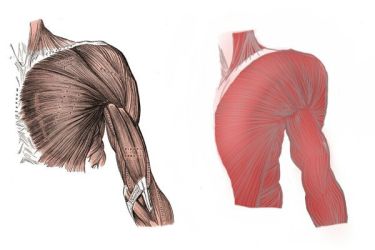
The shoulders are actually called ‘deltoids’ and are made up of 3 heads (or muscles).. The anterior (front), medial (side) and posterior (rear).

Each of these muscles must be trained properly  in order for the entire shoulder to grow, and appear rounded..

anatomy of shoulder.jpg

The shoulder is a ball and socket joint, giving it a wide range of motion.. but.. because of this flexibility, it is not very stable and is easily injured (Reference). So you HAVE to be careful. Warm-up. Don’t be silly. 

(I’m not gunna waste one of these points telling you how to warm-up, because it makes me mildly irate to think that ‘warming up’ would be a secret tip) 

2) TRAIN each DELTOID PROPERLY

The problem is with shoulders, people just wanna do the exercises they know, or enjoy the most. I’m talking about Dumbbell-Overhead Press, Incline Bench (although shoulder activity on this should actually be minimal), Lateral Raises. 

These are all very nice exercises. Very nice. Keep doing them.

But.. just realise you neeeeed to VARY the exercises you do. There’s loads. And each shoulder exercise you do should have a purpose.. you should know exactly which deltoids they are targeting. 

You need to vary the movements you do.

For instance.. Lateral Raises primarily target the MEDIAL (side) delts. Of course, the other delts do not stand-by completely useless, they contribute slightly- but most of the work is being done by the medial deltoid. Therefore, that’s the head that grows more as a result of doing this movement (Lateral Rasies).

Let’s go with a more difficult one.. Overhead Press (Dumbbell/Barbell.. it doesn’t make much difference).. which muscles does this exercises work? (don’t feel stupid if you don’t know, I had to research properly this just to make sure)..

Mainly the ANTERIOR (front) deltoid, and also a decent contribution from the Medial. (of course, other muscles in the body contribute to the entire movement, such as the core, triceps etc.. but we’re focusing on the shoulders here)

Another one.. Incline Bench.

Okay, okay.. this isn’t technically a shoulder movement.. but it does work the shoulder, and you’ll see the point I’m making in a minute (unless you’ve already spotted the point)

Incline Bench, although primarily works the upper portion of the chest, also works the ANTERIOR (front) deltoid.. 

What’s the pattern here? Have you spotted it?

Well.. if you haven’t..

3) MAKE SURE you DON’T neglect the REAR-DELTS.

That’s right. If you want to get FULL, ROUNDED shoulders you can’t just train the front and middle delts.. you’re going to have to train the Rear ones too. 

I made this mistake for a long time.. I would have my Chest day, finish with some lateral raises.. and then I’d have my Shoulder day, and finish with Incline Bench or Dips, all while completely ignoring any exercises that target the rear-delts.. The result = semi-circle shoulders. 

For the first few years of my training I kind of presumed that overhead presses, or any kind of presses, would work the entire shoulder. But looking back, that made no sense at all, since when you press (or push), you push from the anterior, using muscles from the front… So… in order to work the muscles in the back of your body (posterior), including your rear-deltoids, you’re going to have to PULL, rather than press. 

My favourite exercise for the rear-delts are Rear-delt Cable Cross-overs.

You can YouTube how to do these, but I’ll try explain them with my words anyway.. Basically, get yourself inside the cables – with both sides at your disposal – and plug the pin into (on both sides) the lightest or second lightest weight. Take any attachments off the cable, and set it near the top (as long as it’s above your shoulders, its fine). 

Then, grab the cables from opposite ends to your hands.. grab the right-hand side cable with your left, and vice versa. At this point you will be crossed over you’re wearing a straitjacket. Move the cables out in front of you, and pull backwards slowly, keeping your arms slightly bent.. engaging the REAR-DELTS. 

If you’re unsure, just check it out on YouTube.

There are, of course, plenty of other rear-delt exercises.. face-pulls, dumbbell flyes etc.

I’m not going to lie though, training rear-delt can be a ball-ache sometimes. Rear-delts are just one of those muscle-groups that aren’t involved in some of the big, popular compound movements, which is why they get neglected. You have to make a conscious effort to target them.

This is good news for you though.. Because now you know.. Now you can stand-out from the rest, and train rear-delts properly..

It really is one of the biggest secrets to getting rounded shoulders.

If like me.. you’ve neglected them, just try and throw a rear-delt exercises on the end/beginning of a workout where it wouldn’t normally be. Maybe at the start of a leg day, or every upper body workout. I’ve been doing them 3 times a week in the attempt to play catch-up.. and it works. They really started to POP after a couple of months. No more semi-circle shoulders for me..

Next..

4) Train with Proper.. Correct.. GOOD, nice, sexy, good (adjective, adjective, synonym for correct) Form

.. train with proper form.

Don’t be one of those geezers swinging 12kg lateral raises in the corner, looking like a dickhead. You know who you are. No-one will ever be impressed by you doing that. 

What will be even less impressed are your muscles, which will respond with a big fuckyou to muscular hypertrophy. In order for your muscles to grow (not just shoulders, although this is especially prevalent with shoulders, as it is one of the smaller muscle groups), you need to be somewhat disciplined with your form. 

Don’t get me wrong.. there is a time and a place for going heavier, testing yourself, shocking your body and muscles and visceral system… (https://www.urmc.rochester.edu/encyclopedia/content.aspx?contenttypeid=1&contentid=832)..

 But 99% of the time, you’re going to want to lift with proper form. If you lift too heavy with shoulders too often, you’re going to mess them up (in a bad way).

So.. what is the proper form?

Well.. it differs from each exercise, of course. But a good rule of thumb, when the only goal is muscle growth, is the slower the better – particularly in the eccentric portion of the movement (on the way down).

Take Lateral Raises, for example.. firstly, you want to use a weight that you can bang out 12-16 clean reps with. This is usually around 7-10kg for most people. (If you’re unsure, start at 7kg). You want to bring to be controlled when bringing the weights up, rotating your pinky finger up as you complete the movement at the top.

Make sure you feel your deltoids contracting

On the way down, you want to emphasise control even more. Go slow, but not too slow .. I suppose CONTROL is the main word to have in your mind. Maintain your posture. Control in your movement, control in your form, visualising the muscles contracting. This is the best way to make them grow. 

You want every rep to be efficient as possible, because wasted reps add up.. soon it will be wasted sets, wasted exercises, wasted sessions.. you DON’T want that to happen. Make every rep your baby, and your shoulders will respond by getting swole.

5) ‘Progressive Overload’ and Number of Reps

Right.. this last one is slightly less basic. But if you think you’re capable, read on.. 

You might hear the term ‘progressive overload’  a lot – it basically means: just make sure you’re improving. This isn’t measured just by how much weight you lift, it’s also measured by the amount of REPS and even quality of reps you’re doing.

For example, say you’re doing Barbell Overhead press.. (assuming correct form is understood)

Week one you might be lifting 40kg for 8 reps for 4 sets with perfect, immaculate form… Decent, cool… The next week you do 40kg for 10 reps.. but the additional 2 reps were completed by using and bending the knee, to give you a little extra bounce in order to lift (not quite perfect form). The third week, you manage to do 40kg for 10 reps, and this time there was no bouncing- it was perfect form.

Do you see what I mean? This is what progressive overload can look like. There’s improvement.. but the actual weight stayed the same. Progressive overload can be a verrry slowwww process, and gets more slow the more you improve. In regards to this specific example, once you can get to 12 reps with emaculate form, I’d then look to increase the weight to 50kg. 

Right, that’s it.. you can go away and build up those shoulders- become that massive inverted triangle that you’ve always wanted to be. If you apply these tips, yoiull achieve these goals. Just to be consistent with your training.. and more importantly.. be smart.

Have a great day

Introduce Yourself (Example Post)

This is an example post, originally published as part of Blogging University. Enroll in one of our ten programs, and start your blog right.

You’re going to publish a post today. Don’t worry about how your blog looks. Don’t worry if you haven’t given it a name yet, or you’re feeling overwhelmed. Just click the “New Post” button, and tell us why you’re here.

Why do this?

  • Because it gives new readers context. What are you about? Why should they read your blog?
  • Because it will help you focus you own ideas about your blog and what you’d like to do with it.

The post can be short or long, a personal intro to your life or a bloggy mission statement, a manifesto for the future or a simple outline of your the types of things you hope to publish.

To help you get started, here are a few questions:

  • Why are you blogging publicly, rather than keeping a personal journal?
  • What topics do you think you’ll write about?
  • Who would you love to connect with via your blog?
  • If you blog successfully throughout the next year, what would you hope to have accomplished?

You’re not locked into any of this; one of the wonderful things about blogs is how they constantly evolve as we learn, grow, and interact with one another — but it’s good to know where and why you started, and articulating your goals may just give you a few other post ideas.

Can’t think how to get started? Just write the first thing that pops into your head. Anne Lamott, author of a book on writing we love, says that you need to give yourself permission to write a “crappy first draft”. Anne makes a great point — just start writing, and worry about editing it later.

When you’re ready to publish, give your post three to five tags that describe your blog’s focus — writing, photography, fiction, parenting, food, cars, movies, sports, whatever. These tags will help others who care about your topics find you in the Reader. Make sure one of the tags is “zerotohero,” so other new bloggers can find you, too.

Design a site like this with WordPress.com
Get started